The React Ecosystem in 2024
A comprehensive guide to choosing the right React tools, libraries, and stacks for different project types in 2024.
Hi there 👋,
Whether you’re a novice trying to navigate the vast universe of React, or a seasoned expert aiming to optimize your tech stack, selecting the right library combinations can make or break your project. In this article, I will guide you through this selection process, addressing real issues and recommending combinations for different types of projects, ensuring you’re well-equipped to start on the right foot. 👣
Defining Your Project’s Goals and Complexity
Before diving into the sea of libraries and tools available🏊, it’s crucial to ask yourself: What is the main goal of my project? How complex will it be? The answers to these questions will significantly influence your choice of technologies, ensuring that the tools you choose align perfectly with your project requirements.
Understanding of Common Project Types
Projects can range from complex interactive dashboards that require meticulous state management and dynamic UIs to simpler blog websites focusing on SEO and performance. Each type of project demands a different set of tools and frameworks to be efficiently executed.
Navigating the React Ecosystem
In the rich landscape of React ecosystem, your choices are plentiful and can be overwhelming. Let’s break down the most commonly used tools and libraries, ensuring you understand where each can be best utilized.
#1: State Management
- Redux: Known for its robustness and extensive middleware support, It can be complex but offers unrivaled control and predictability. Redux Toolkit’s structured approach, including actions, reducers, and store, is well-suited for complex, large-scale projects. It promotes a centralized and declarative approach to state management.
- Zustand: A lightweight state management solution, Zustand is favored for its simplicity and excellent performance, suitable for both small and large applications. It offers a more intuitive API compared to Redux. It’s is perfect for smaller projects that require a quick and straightforward state management solution.
#2: Server State Management
- SWR: Ideal for simple data fetching with features like caching, revalidation, and focus tracking, making data fetching simpler and more efficient.
- TanStack Query: Robust tool for server-state management, handling caching, background updates, and stale data, perfect for complex applications.
- RTK Query: Part of the Redux toolkit, it provides a powerful data fetching and caching solution, seamlessly integrating with Redux state management.
#3: Routing
- React Easy Router: Streamlines routing in React apps with a simpler. It’s suitable for smaller applications or those requiring straightforward routing solutions.
- React Router: The standard for dynamic routing in React, supporting complex routing needs in larger applications.
- TanStack Router: Offers modern features like type safety and lazy loading, making it a good fit for applications that benefit from cutting-edge routing solutions.
#4: Form Handling
- Formik: Handles complex form logic with ease, offering deep customization options, ideal for complex scenarios. Formik is not actively maintained, which could impact its compatibility with future React updates and evolving best practices.
- React Hook Form: Minimizes re-renders and improves performance using hooks, best for performance-critical applications. React Hook Form is a recommended choice due to its active development and modern approach to form handling.
- Yup & Zod: Libraries for schema validation, enhancing form validation with structure and simplicity.
#5: Styling
- TailwindCSS: Utility-first framework that provides a set of pre-built, atomic CSS classes to accelerates development and reduces the need to write custom CSS. highly customizable. An excellent choice for developers who want a utility-driven approach to styling.
- Emotion and Styled Components: Provide powerful CSS-in-JS solutions, offering scoped and dynamic styling for projects that require tightly coupled styling and components.
#6: UI Component Libraries
- Material UI, Ant Design: Designed for enterprise-level applications, providing a large volume of ready-to-use components.
- Chakra UI, Daisy UI, Mantine UI: Offer a range of components with varying design philosophies, emphasizing ease of use and customization.
- Headless UI, Radix UI: Provide modernized, accessible UI components, ideal for custom styling.
- Shadcn UI: A compilation of reusable components that can be easily copied and pasted into our applications. Shadcn UI is a highly customizable and extensible library, making it a great choice for building component libraries or design systems.
#7: Animations
- Framer Motion: A powerful library for creating intuitive animations, especially in prototype and production environments.
- GreenSock Animation Platform (GSAP): Offers high-performance animations, suitable for complex animation requirements.
- React Spring: Provides physics-based animations, making UI interactions feel more natural.
#8: 3D Integration
- Three.js: Extends React’s component model to 3D rendering, perfect for projects needing 3D visuals.
#9: Icon Libraries
- Lucide Icons, MUI Icons, Hero Icons, Font Awesome: Offer diverse sets of ready-to-use icons, enhancing UI design across various applications.
#10: Testing
- ViTest: ViTest is a unit testing framework powered by vite. It offers a straightforward way to write unit tests, component tests, and end-to-end tests for React, Vue, Svelte & more applications. Suitable for projects already utilizing Vite.
- React Testing Library: React Testing Library is a popular testing library for React applications. It focuses on writing tests that mimic user interactions, helping you ensure that your components behave as expected from a user’s perspective. Promoting better testing practices.
- Playwright: Offers robust end-to-end testing across browsers. It provides a unified API for browser automation and allows you to write tests that validate your web application’s functionality, ideal for ensuring application reliability in diverse environments.
#11: Authentication
- JSON Web Token (JWT): Standard technologies for secure token-based authentication. Securely transmit information between parties in a JSON format.
- NextAuth, Kinde, Clerk: Provide simple integrations for authentication in React apps, with NextAuth tailored specifically for Next.js projects.
#12: File Uploads
- AWS S3, Cloudinary: Robust solutions for handling file uploads and media storage with extensive features.
- Uploadthing: A newer service that simplifies the file upload process for Next.js applications.
#13: Charting and Grid Solutions
- Recharts, React Chart-js2, ApexChart: Offer rich charting libraries tailored for React, great for data visualization needs.
- AG Grid, MUI Data Grid: Provide powerful solutions for data grid challenges, with AG Grid suitable for complex grid configurations.
#14: Documentation
- Swagger: It’s allows to create interactive, machine and human-readable RESTful API documentation.
- Docusaurus: Docusaurus is a widely adopted tool for building documentation websites. It is an open-source framework that provides a clean, highly customizable and user-friendly interface for creating and maintaining documentation.
- Nextra: Nextra offers a modern and minimalist approach to building documentation websites. Lightweight and user-friendly.
#15: ORMs (Object-Relational Mappers)
- Prisma: Prisma offers a type-safe ORM experience for TypeScript and modern Node.js applications. It simplifies database workflows with an intuitive query builder and automates migrations.
- Sequelize: As a promise-based Node.js ORM, Sequelize supports a wide range of databases including PostgreSQL, MySQL, MariaDB, SQLite, and SQL Server. It suitable for complex data handling needs.
- Mongoose: Specifically designed for MongoDB, Mongoose provides a straight-forward, schema-based solution to model your application data. It includes built-in type casting, validation, query building, and business logic hooks, ideal for applications that leverage document databases.
- Drizzle: Drizzle is a lightweight toolkit that promises to make object relational mapping with your favorite databases fun again, all while maintaining type safety and minimizing overhead.
#16: Databases
- Relational Databases: The most popular relational databases include PostgreSQL, MySQL, and SQL Server. These databases are known for their robustness, support for complex queries, and ACID (Atomicity, Consistency, Isolation, Durability) compliance. It’s well suitable to the projects that have more complex relationships.
- Non-relational Databases: MongoDB and Cassandra are popular choices in the NoSQL category. MongoDB offers flexible document schemas and is designed for scalability and complex queries with a JSON-based query language. Cassandra excels at handling large amounts of data across many commodity servers, providing high availability without compromising performance.
#17: Content Management Systems (CMS)
- Sanity.io: A highly customizable headless CMS that can be tailored to suit complex content needs, perfect for content-heavy sites.
- Payload CMS: Combines the flexibility of a headless CMS with the power of an application framework, ideal for projects requiring deep integrations and custom workflows.
#18: Backend as a Service (BaaS)
- Supabase: Provides a suite of tools including a PostgreSQL database, authentication, instant APIs, and real-time subscriptions, making it a full-fledged alternative to Firebase.
- Firebase: Known for its real-time database, Firebase offers a comprehensive development platform with hosting, authentication, and more, suitable for projects needing quick setup and scalability.
- AppWrite: AppWrite is an open-source BaaS platform that provides a secure backend to build web and mobile applications. It supports multiple database types and offers features like real-time capabilities, OAuth authentication, and more, aiming to be a developer-friendly and versatile alternative.
#19: Payment Processors
- Stripe: Known for its powerful API and extensive documentation, Stripe allows developers to integrate payments into their applications seamlessly. It supports a wide range of payment methods, from credit cards to newer mobile payment technologies.
- PayPal: As one of the most recognized names in digital payments, PayPal offers robust solutions for e-commerce, including easy integration into existing websites and a trusted payment gateway experienced by millions.
- Lemon Squeezy: Lemon Squeezy is a newer player that makes selling digital products simple. It handles everything from payments to EU VAT, making it particularly appealing for EU-based developers and businesses looking to streamline their operations.
#20: Hosting Servers
- Vercel: Vercel is specially tailored for Next.js, offering optimal performance for static and Jamstack deployments.
- AWS Amplify: AWS Amplify is a development platform from Amazon that simplifies hosting for full-stack applications built with technologies like React, Next.js, and Vue. It integrates well with other AWS services
- AWS EC2: AWS EC2 provides scalable compute capacity in the cloud, allowing you to use and pay for only the resources you need. It’s highly customizable and ideal for hosting applications that require specific, complex configurations or that must scale on demand.
- VPS (Virtual Private Server): VPS hosting gives you more control over your hosting environment.It allows for custom configurations and is ideal for developers needing specific software.
Recommended Combinations for Each Project Type
To ensure the optimal setup for various project types using the React ecosystem, including SSR capabilities, SEO benefits, and a robust framework for both static and dynamic applications. Here are my recommended tech stacks for different project scenarios:
# Simple Client-Side Applications
- Stack: React, Zustand, React Easy Router, SWR, React Hook Form, TailwindCSS, Chakra UI, Framer Motion
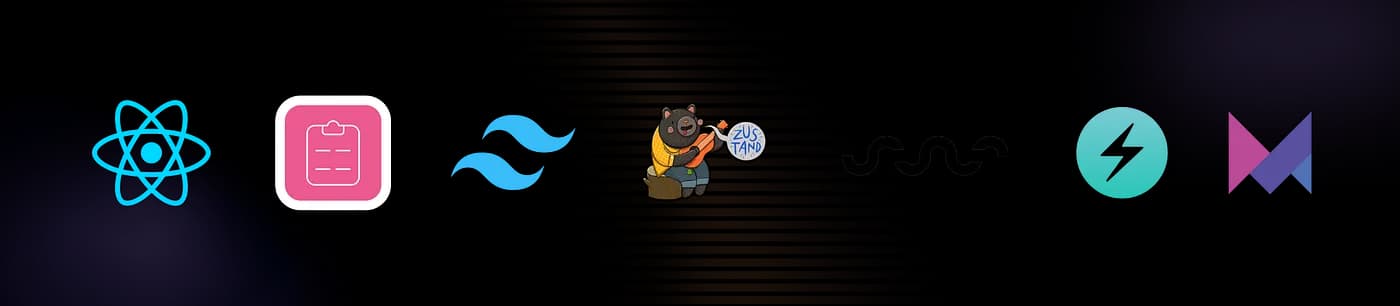
This stack is ideal for straightforward applications that require minimal backend interaction. React Easy Router and Zustand simplify routing and state management, while SWR efficiently handles data fetching. React Hook Form and TailwindCSS ensure a sleek, user-friendly form management and UI styling. Chakra UI provides a set of accessible components that are easy to customize, and Framer Motion adds engaging animations without much overhead.
Example: A personal portfolio website.
# Static Blog Applications
- Stack: Next.js, Zustand, React Query, SWR, React Hook Form, Zod, TailwindCSS, Headless UI, Docusaurus
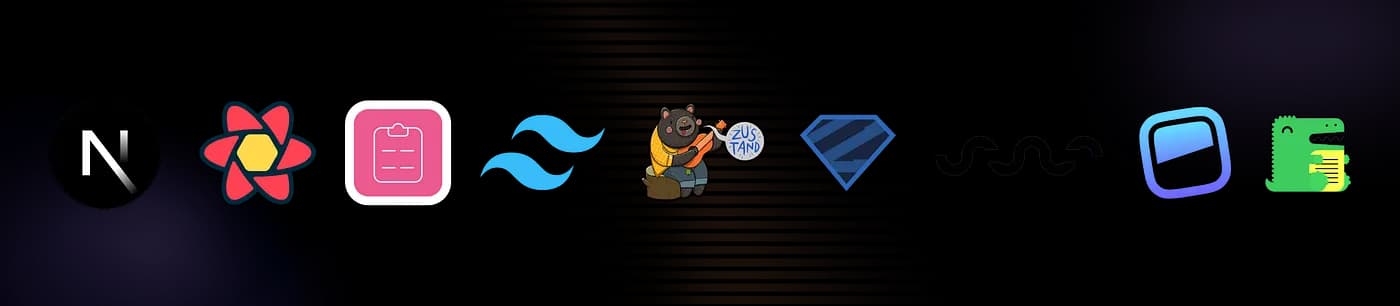
Next.js facilitates static site generation for fast load times and optimal SEO. Zustand manages application state, while React Query and SWR streamline server data synchronization. React Hook Form combined with Zod enhances form capabilities with robust validation. TailwindCSS and Headless UI offer stylistic flexibility and accessibility. Docusaurus is included for easy content management and documentation.
Example: Blog sites and Documantation websites.
# Complex Interactive Applications
- Stack: Next.js, Redux, React Hook Form, Zod, Tailwind, Shadcn UI, Lucide Icons, RTK Query, ApexChart, AWS S3, Mongoose, MongoDB, React Testing Library, JWT or NextAuth
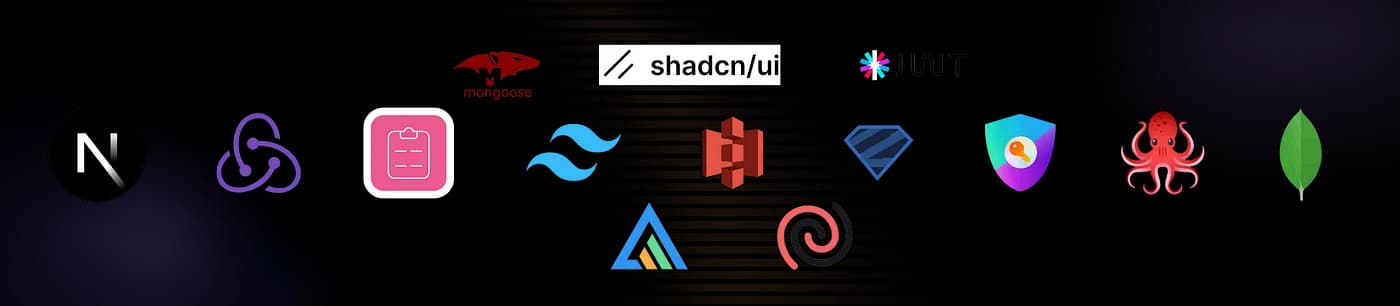
Next.js provides server-side capabilities essential for dashboard functionality, with Redux and RTK Query managing complex state and data operations. React Hook Form and Zod handle form operations effectively. Shadcn UI and Lucide Icons offer sophisticated UI components. ApexChart delivers dynamic charting capabilities, MongoDB and Mongoose manage large datasets efficiently, and AWS S3 handles large-scale data storage. React Testing Library ensures robust testing, and authentication is secured by JWT or NextAuth.
Example: An analytics dashboard for e-commerce sales.
# Full-Stack Enterprise Applications
- Stack: Next.js, Zustand, TanStack Query, Formik, Yup, Material UI, Radix UI, Styled Components, Clerk or Kinde, Cloudinary, recharts, Prisma, Swagger
This stack supports complex enterprise needs with Next.js at the core for full-stack capabilities. Zustand and TanStack Query offer advanced state and server-side data management. Formik and Yup provide powerful form handling. Material UI and Radix UI deliver rich UI components, styled with Styled Components for custom styles. Clerk or Kinde handle secure authentication, Cloudinary manages media assets, and Recharts for data visualization. Prisma facilitates robust database interactions, and Swagger manages API documentation.
Example: A customer relationship management (CRM) system.
# E-commerce Platforms
- Stack: React with TypeScript, Vite, JWT, Redux, React Router, RTK Query, React Hook Form, Zod, Radix UI, TailwindCSS, Stripe, Payload CMS, ViTest, ApexChart, Drizzle
TypeScript and React ensure type safety and scalability. Vite offers fast builds and hot reloading. JWT and Redux provide secure authentication and state management. React Router and RTK Query manage routing and server state. React Hook Form and Zod enhance form functionality. Radix UI and TailwindCSS ensure a modern, responsive design. Stripe handles secure payment processing, Payload CMS manages content, and ViTest offers testing solutions. ApexChart adds advanced charting capabilities, and Drizzle connects to blockchain-based services.
Example: An online grocery store like Amazon.
# Real-time Applications
- Stack: Next.js, Zustand, Socket.io, Supabase, PostgreSQL or Redis, NextAuth, TailwindCSS, Playwright
Next.js and Zustand form the foundation, with Socket.io handling real-time communications. Supabase provides backend services, and PostgreSQL or Redis offer robust data management. NextAuth secures user authentication, TailwindCSS offers custom styling, and Playwright ensures end-to-end testing.
Example: A live sports score tracking app.
# Content-Rich SEO-Focused Websites
- Stack: Next.js, React Query, Docusaurus, TailwindCSS, Cloudinary, Framer motion

Next.js enhances SEO through server-side rendering. React Query manages data fetching efficiently. Docusaurus allows easy content updates and management, TailwindCSS for stylish layouts, Cloudinary for optimal media management, and Framer Motion for smooth animations.
Example: A digital marketing agency’s website.
# Modern Animated Web Applications
- Stack: Next.js, TailwindCSS, Sanity CMS, Framer Motion or GSAP, Three.js, Headless UI, SVG animations, Aceternity UI, Magic UI
Tailored for dynamic, visually engaging sites. Next.js and TailwindCSS provide the development backbone. Sanity CMS manages content seamlessly. Framer Motion and GSAP offer rich animation capabilities, with Three.js for 3D effects. Headless UI provides the base for UI components, enhanced by custom SVG animations, Aceternity UI, and Magic UI for cutting-edge visual effects.
Example: An interactive educational platform for children.
# Cloud Storage Applications
- Stack: React, Material UI, AWS S3, JWT, Redux Toolkit

React and Material UI create a user-friendly interface. AWS S3 offers scalable cloud storage solutions. JWT ensures secure user authentication, and Redux Toolkit provides efficient state management.
Example: A storage management system like Dropbox.
I appreciate you taking the time to read this article.🙌
Before you move on to explore the next article, don’t forget to give your claps 👏 for this article and share with your friends. Stay connected with me on social media. Thanks for your support and have a great rest of your day! 🎊
✍️ Vinojan Veerapathirathasan.